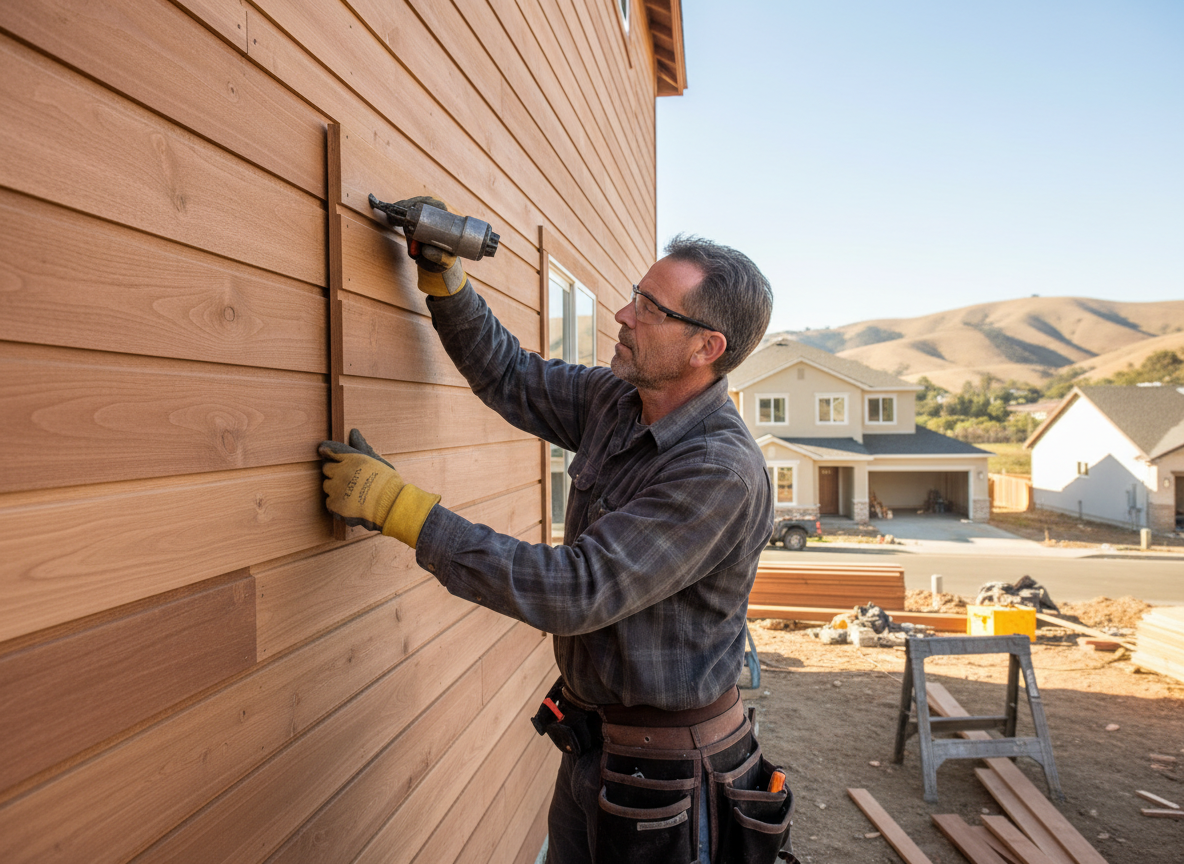
Wood siding in Oakley demands attention to the freeze-thaw cycles that hit Hamilton County each winter. Older homes from the 1920s through 1950s around Oakley Square and nearby Hyde Park often have original cedar or pine that has absorbed decades of moisture from spring rains and summer humidity. Proper installation starts with checking for hidden rot behind the boards, especially at the foundation line where soil splash and poor grading accelerate decay. Choosing kiln-dried cedar over pine reduces movement once temperatures swing from below freezing to the 50s in a single day.
Flashing details around windows and rooflines matter more here than in drier climates because water can sit against the wood during prolonged overcast periods common along the Mill Creek corridor. Homeowners frequently see paint failure on south-facing walls where afternoon sun heats the surface then cold nights pull moisture back in. We mill new boards to match existing profiles on historic homes rather than using stock sizes that leave visible gaps. Edge sealing every cut end before hanging prevents the capillary action that lets water travel along the grain and rot from the inside out.
Terrain around Oakley slopes gently toward the east, so drainage patterns direct runoff along many foundation walls. This means lower courses of siding need extra clearance and metal starter strips to keep wood above grade. We also watch for ivy and mature landscaping that traps moisture against the house for months. When replacing sections, we inspect sheathing for mold that developed during the humid months between May and September, a step that prevents callbacks once the new siding is up.
Seasonal Considerations
Wood siding work in Oakley slows in deep winter when temperatures stay below freezing for days, because adhesives and finishes need stable conditions to cure properly. Spring and fall offer the best windows for full replacements before heavy rains return.
Technician insight
In Oakley, the thing that catches most people out with wood siding is how the older homes built before 1950 trap moisture behind the boards during our long humid summers, then the winter freeze-thaw cycles along the Hyde Park ridge line push the rot through the lower three courses faster than anywhere else in Hamilton County.
Lower Course Replacement on 1930s Oakley Home
A homeowner near Madison Road noticed soft spots at the base of the east wall after a wet spring. We found the original pine had rotted where grading sloped water against the foundation. We replaced the bottom three courses with cedar, added a metal starter strip, and corrected the soil grade. The new siding has stayed dry through the following winter without further issues.
How it works
- 1
On-Site Assessment
We examine every elevation, probe for soft spots, and note drainage issues around the foundation on Oakley properties.
- 2
Material Selection
We match species and profile to the home's age while accounting for local humidity and sun exposure on each wall.
- 3
Removal and Preparation
Damaged boards come off, sheathing gets inspected and dried, and flashing gets upgraded at all transitions.
- 4
Installation and Finish
New boards are installed with proper gaps, sealed edges, and finished with coatings suited to Cincinnati weather swings.
Pricing
Upfront quotes after inspection; final cost depends on wood species, extent of hidden damage, and accessibility on older Oakley homes.