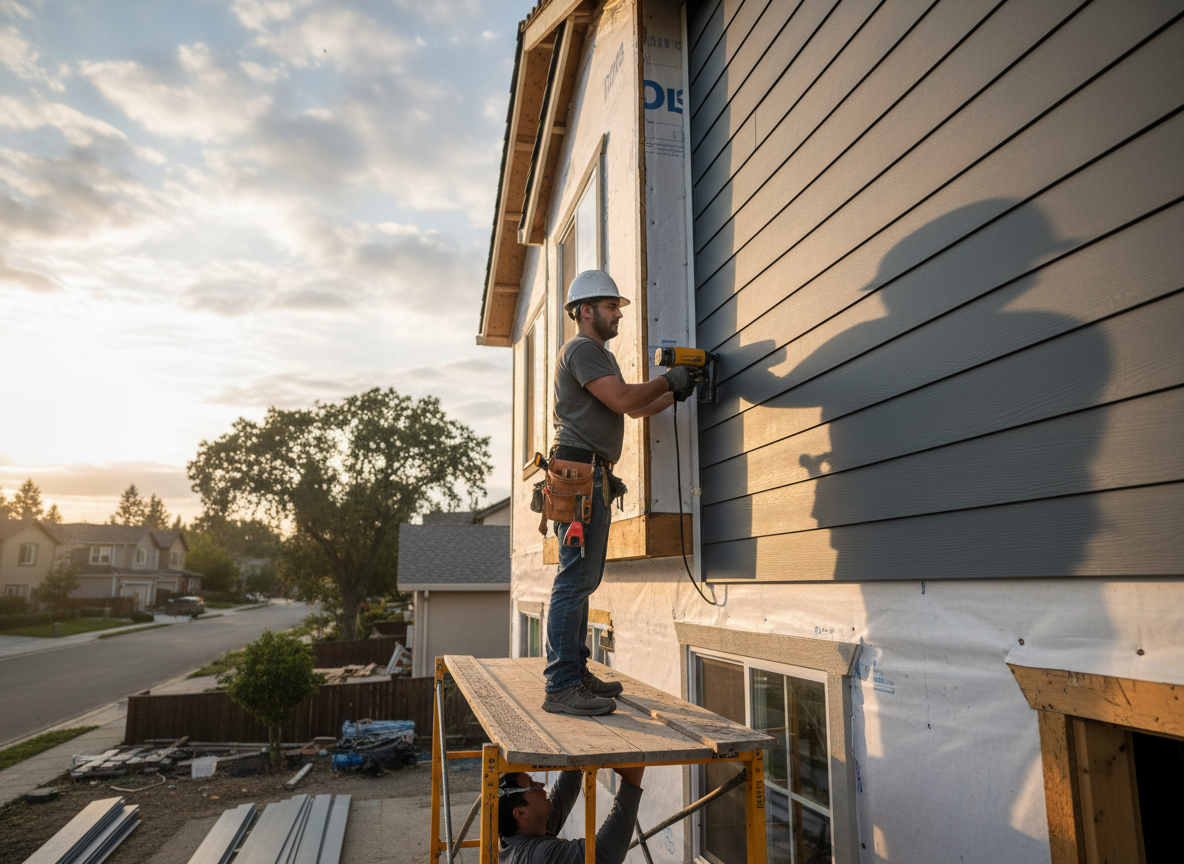
Oakley features many homes built between the 1920s and 1950s with original wood or early aluminum siding that has seen repeated layers added over time. When installing new siding, crews must first strip back to the sheathing to check for deteriorated felt paper and improper previous flashing around windows. Skipping this step often leads to trapped moisture that shows up as soft spots months later. Fiber cement and insulated vinyl are common choices here because they handle the freeze-thaw cycles without the cupping that wood experiences on north-facing walls.
Proper housewrap integration and furring strips are essential on two-story Oakley properties where roof overhangs are shallow. Installers pay extra attention to the transition between the foundation and first course, especially on lots that slope toward the street. Nail placement must account for the original balloon framing found in many blocks, which can shift slightly when old siding is removed. Leaving even small gaps at corners allows water to work behind the new material during heavy spring rains.
Homeowners frequently ask about matching the look of neighboring houses while improving energy performance. Modern insulated panels can be installed over existing sheathing once rot is addressed, but the added thickness changes window and door trim details. Crews also verify that attic ventilation remains adequate after the job, since tighter siding can reduce natural airflow in older attics that were never designed for modern insulation levels.
Technician insight
In Oakley, the thing that catches most people out with siding installers is the hidden rot behind multiple layers of old siding on 1920s-1950s homes; the balloon framing and shallow roof overhangs mean you have to open the wall fully rather than overlay if you want the job to last.
Hidden Rot Behind Layered Siding
A two-story Oakley home showed bubbling paint on the north wall. Removal revealed deteriorated sheathing and felt from previous installations. The crew replaced damaged sections, added new flashing at the foundation line, and installed fiber cement siding with improved ventilation. The home now has consistent drainage and no soft spots after the first winter.
How it works
- 1
Site Assessment
Walk the property to inspect existing siding, substrate condition, and flashing details on Oakley homes.
- 2
Material Selection
Review options suited to the home's age and exposure, including fiber cement or insulated vinyl.
- 3
Preparation And Removal
Strip old layers, repair sheathing, and install new housewrap with correct overlaps.
- 4
Installation
Hang new siding with proper nailing, flashing, and ventilation details.
- 5
Final Inspection
Check seams, trim, and drainage before cleanup.
Pricing
Cost depends on material choice, number of stories, and extent of substrate repairs needed.