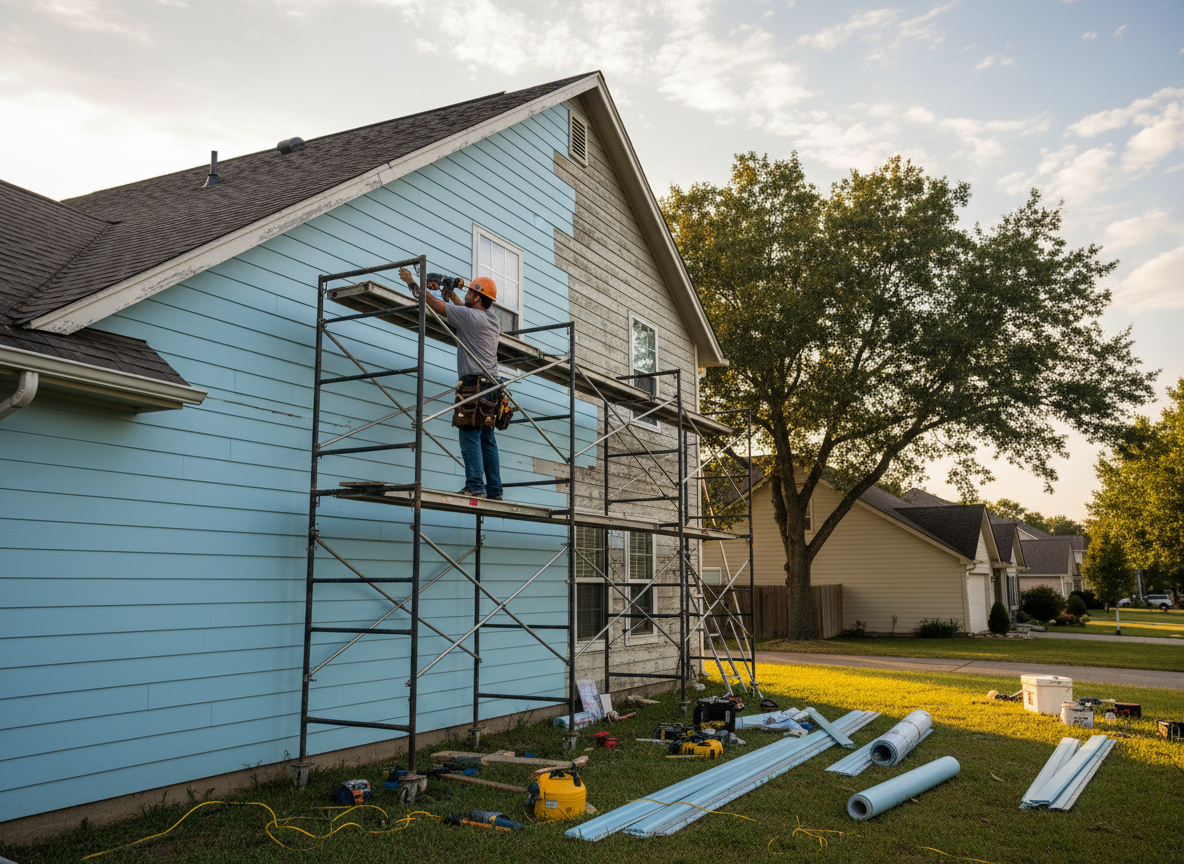
Oakley features many early-20th-century homes with original wood siding or early vinyl overlays that suffer from Cincinnati's frequent freeze-thaw cycles and heavy summer humidity. These conditions cause cupping, rot at the baseboards, and sealant failure around windows where moisture collects against the foundation slope common in the neighborhood's rolling terrain. Proper underlayment and flashing details prevent water intrusion that often goes unnoticed until interior drywall damage appears.
When replacing siding on these homes, crews must account for uneven sheathing left from prior layers and match the reveal patterns of neighboring properties to stay within Oakley historic district guidelines. Vinyl and fiber cement options perform differently here: fiber cement holds up better against hail and wind-driven rain off the Ohio River valley but requires specific nailing schedules to avoid cracking during winter installs. Skipping the step of checking for hidden knob-and-tube wiring or knobbed insulation during tear-off leads to code issues later.
Homeowners in Oakley often discover that partial siding replacements fail to blend with the rest of the elevation because older paint colors have faded unevenly from sun exposure on south-facing walls. Full elevation work allows proper integration of new housewrap and drainage planes that direct water away from the brick foundations typical along Madison Road and surrounding streets.
Seasonal timing matters because spring pollen and fall leaf debris clog weep holes if not cleared during install, and winter installs require heated enclosures to keep adhesives workable below freezing.
Technician insight
In Oakley, the thing that catches most people out with residential siding contractors is the hidden rot behind the first course where the lot slopes toward the foundation on many pre-1950 homes along the side streets off Madison Road. The freeze-thaw cycles here push water up under the starter strip faster than in flatter Cincinnati neighborhoods, and skipping a full base inspection means the new siding fails at the bottom within two winters.
Oakley Home Siding Refresh
A 1920s Oakley two-story showed water staining at the rear corners after heavy spring rains. Inspection revealed deteriorated sheathing and failed flashing where the original wood met the brick foundation. We removed the lower three courses, replaced the damaged substrate, added new flashing and housewrap, then reinstalled matching fiber cement to blend with the upper elevation. The homeowner reported no further moisture issues after the next winter.
How it works
- 1
Site Assessment
Measure elevations, inspect substrate, and note drainage patterns around the home's foundation in Oakley.
- 2
Material Selection
Review options that match the home's age and exposure to local weather while staying within neighborhood appearance standards.
- 3
Preparation and Removal
Remove existing layers, repair sheathing, and install new housewrap with proper overlaps and flashing.
- 4
Installation
Apply new siding with correct fasteners, expansion gaps, and integration around windows and doors.
- 5
Final Inspection
Check seals, ventilation, and cleanup before sign-off.
Pricing
Pricing varies by material choice, home size, and extent of substrate repairs; quotes provided after on-site review.