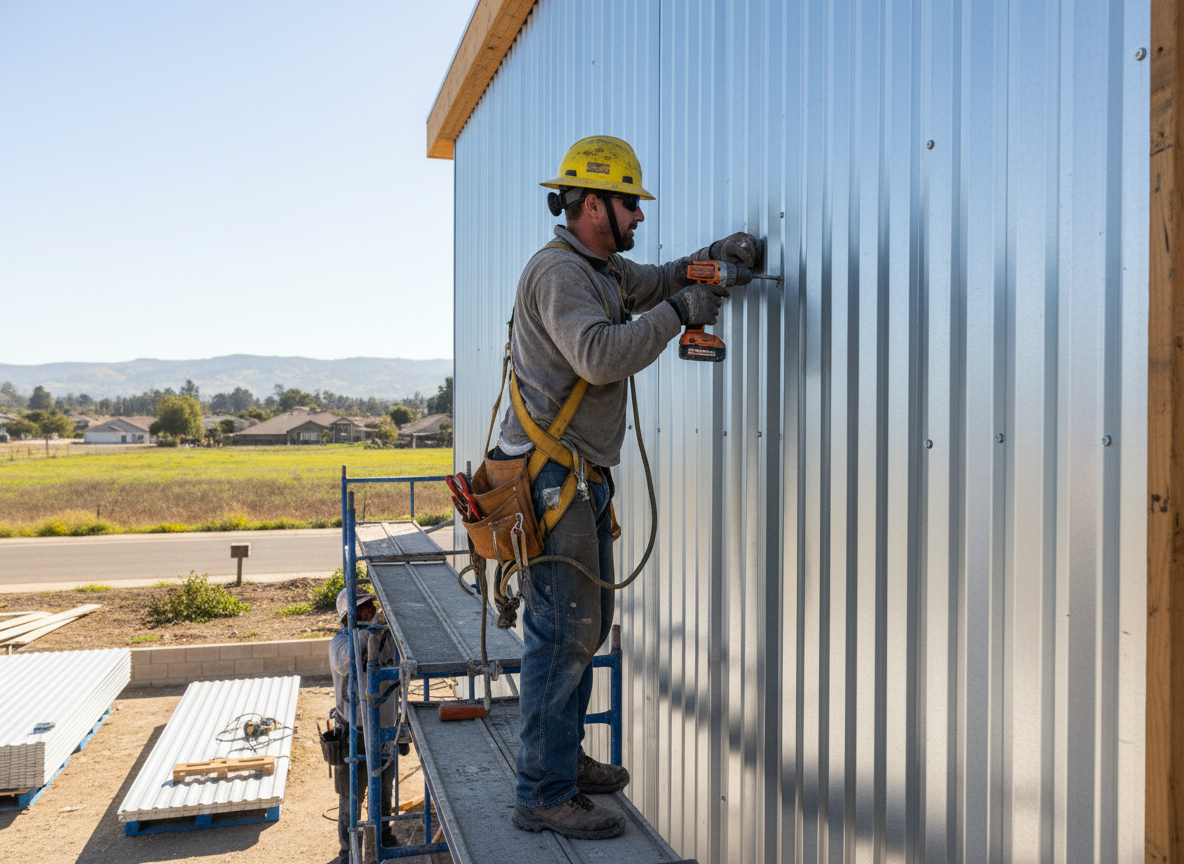
Metal siding on Oakley homes must account for Hamilton County freeze-thaw cycles that cause panels to expand and contract. Older wood-frame houses common in the neighborhood often have uneven walls, so installers add furring strips to create a flat plane and prevent oil-canning. Proper ventilation behind the siding stops moisture buildup during heavy spring rains that hit the Oakley area.
Choosing the right gauge matters here. Thinner panels dent easily from hail or falling branches near Hyde Park borders, while 26-gauge steel holds up better on exposed two-story homes. Edge details around windows and doors need extra flashing because wind-driven rain funnels into those joints during summer storms. Skipping this step leads to water tracking into sheathing on many 1940s-1960s Oakley properties.
Revivora Tech works from 3159 Linwood Ave and responds any hour. Crews check existing insulation before covering it, since metal transfers heat and cold quickly in Cincinnati winters. Homeowners see the difference when seams are sealed correctly instead of relying on caulk that fails after one season.
Technician insight
In Oakley the thing that catches most people out with metal siding contractors is the way 1950s homes have settled unevenly along the slope toward the Little Miami River valley. If crews skip extra shimming, panels telegraph the dips within a year and the seams open during the first hard freeze.
Oakley Two-Story Metal Siding Refresh
Homeowner called about buckling panels on the west wall after a harsh winter. Inspection showed missing furring and trapped moisture behind the old siding. Crew removed the damaged sections, added ventilation strips, and installed new 26-gauge panels with proper gaps. The siding now handles expansion without distortion through summer rains and winter cycles.
How it works
- 1
Site Assessment
Walk the property to check wall condition, existing siding, and exposure to sun and wind typical in Oakley.
- 2
Material Selection
Review gauge, color, and trim options that match the home's age and neighborhood style.
- 3
Preparation and Installation
Install furring, house wrap, and panels with correct expansion gaps for local temperature swings.
- 4
Final Inspection
Check seams, flashing, and ventilation before leaving the job.
Pricing
Cost depends on square footage, gauge chosen, and access on two-story homes; call for an upfront quote.