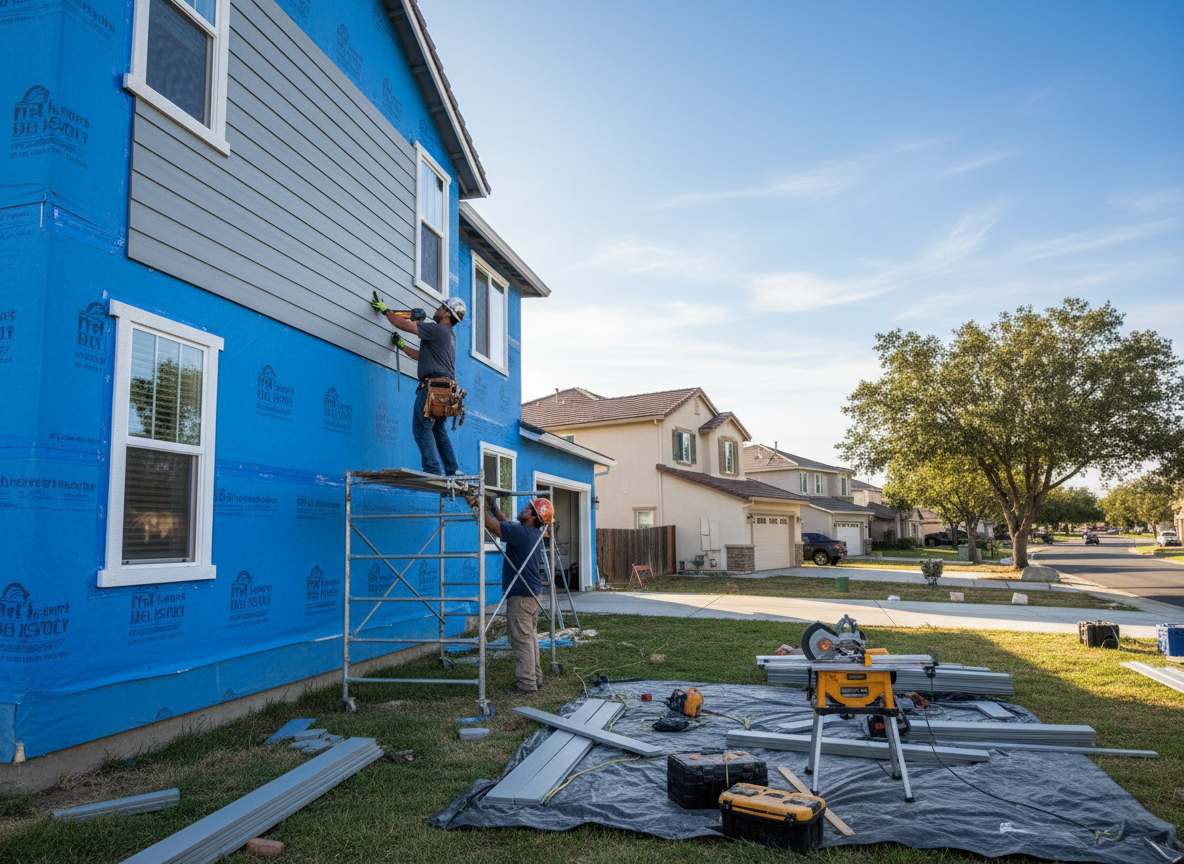
Oakley homes often date to the early 1900s through mid-century, featuring wood clapboard or asbestos siding that has endured decades of Ohio freeze-thaw cycles. Exterior siding contractors must first strip failed layers, inspect for rot along the foundation line, and install proper housewrap before new material. Vinyl and fiber cement perform best here because they expand and contract without cracking during January lows and July humidity spikes common in the Oakley area.
Water intrusion along window and door trim is the most frequent failure point on two-story homes near Linwood Ave. We remove old caulk, replace deteriorated sheathing, and flash every joint to code before siding panels go up. Skipping these steps leads to mold inside walls within two seasons of heavy spring rain. Every job starts with a full elevation check to spot hidden damage from past ice dams.
Terrain around Oakley includes gentle slopes that direct runoff toward foundations. Exterior siding contractors account for this by extending new siding below the water table line and adding weep holes at the base. This prevents hydrostatic pressure from pushing moisture behind the new surface, a detail that matters on properties where soil stays saturated after prolonged wet periods.
Technician insight
In Oakley, the thing that catches most people out with exterior siding contractors is hidden rot behind original wood siding on homes built before 1950 near the Linwood Ave corridor, where spring rains and poor original flashing let water sit against the sheathing for years before new panels are even ordered.
Oakley two-story with ice-dam damage
Heavy winter snow had pushed water under the eaves of a 1920s Oakley home. We found saturated sheathing and mold on the north wall. After replacing the damaged sections and adding extended drip edge, new fiber cement siding was installed with improved ventilation at the soffits.
How it works
- 1
On-site assessment
We walk every elevation, probe suspect boards, and note drainage patterns around the Oakley property.
- 2
Material and color selection
Homeowners choose from vinyl, fiber cement, or engineered wood suited to Cincinnati winters and summer humidity.
- 3
Preparation and underlayment
Old siding is removed, sheathing repaired, and a continuous weather barrier applied with taped seams.
- 4
Installation and trim work
Panels are hung with proper expansion gaps, all openings flashed, and trim installed for a finished look.
- 5
Final walkthrough
We review every seam, check drainage, and leave the site clean before the 24/7 support line is provided.
Pricing
Upfront quotes follow a detailed inspection; material choice and home stories drive final cost.